
Building-Level Energy Storage Lab Platform & Auto-Control Project
The project integrates 3×10MWh residential storage units and 1×230MWh commercial storage onto the same building busbar, targeting charge-discharge lab-grade load scenarios to build a scalable energy storage experimental platform for future PV integration, green energy simulation, peak-valley arbitrage, and demand charge reduction.
Storage Capacity
260MWh
3×10MWh + 1×230MWh
Demand Reduction
12%
Based on monthly max 15-min avg. capacity
Monthly Arbitrage
¥4,000+
Peak-valley spread strategy returns
Project Overview
This project was not a pure energy storage revenue project from the start, but rather the construction of a comprehensive experimental platform targeting building lab loads. The platform integrates storage devices, meters, and building load data, then implements auto-control and peak-valley arbitrage algorithms. The project also reserves capacity for future PV integration, enabling green energy simulation, light-storage coordination strategy verification, and peak-shaving in commercial electricity price scenarios.
Project Challenges
High Lab Load Fluctuation
Building load has charge-discharge lab characteristics with significant short-term power variation, demanding higher requirements for energy storage control strategies.
Complex Shared Busbar Integration
Multiple storage units connected to the same building busbar require accurate identification and coordination of energy flows between storage, meters, and building loads.
Demand Charge Pressure
Demand charges are based on the monthly peak 15-minute average capacity, requiring timely peak shaving within critical windows.
PV Not Yet Installed
The project needed to build the experimental platform in advance, reserving capacity for future PV integration, green energy generation simulation, and optimized dispatch.
Solution Design
Storage & Meter Integration
Complete data integration of storage devices, meters, and the platform to establish real-time monitoring, status recognition, and operational logging.
Auto-Control Algorithm
Based on building real-time load, storage state, and demand threshold, automatically dispatch charge/discharge control strategies to reduce manual intervention.
Peak-Valley Arbitrage Algorithm
Combined with commercial electricity price peak-valley periods, automatically schedule valley charging and peak discharging to achieve stable arbitrage returns.
Demand Management Strategy
Peak-shaving control focused on the maximum 15-minute average capacity to reduce monthly demand charges and excess electricity usage risk.
System Interface Display
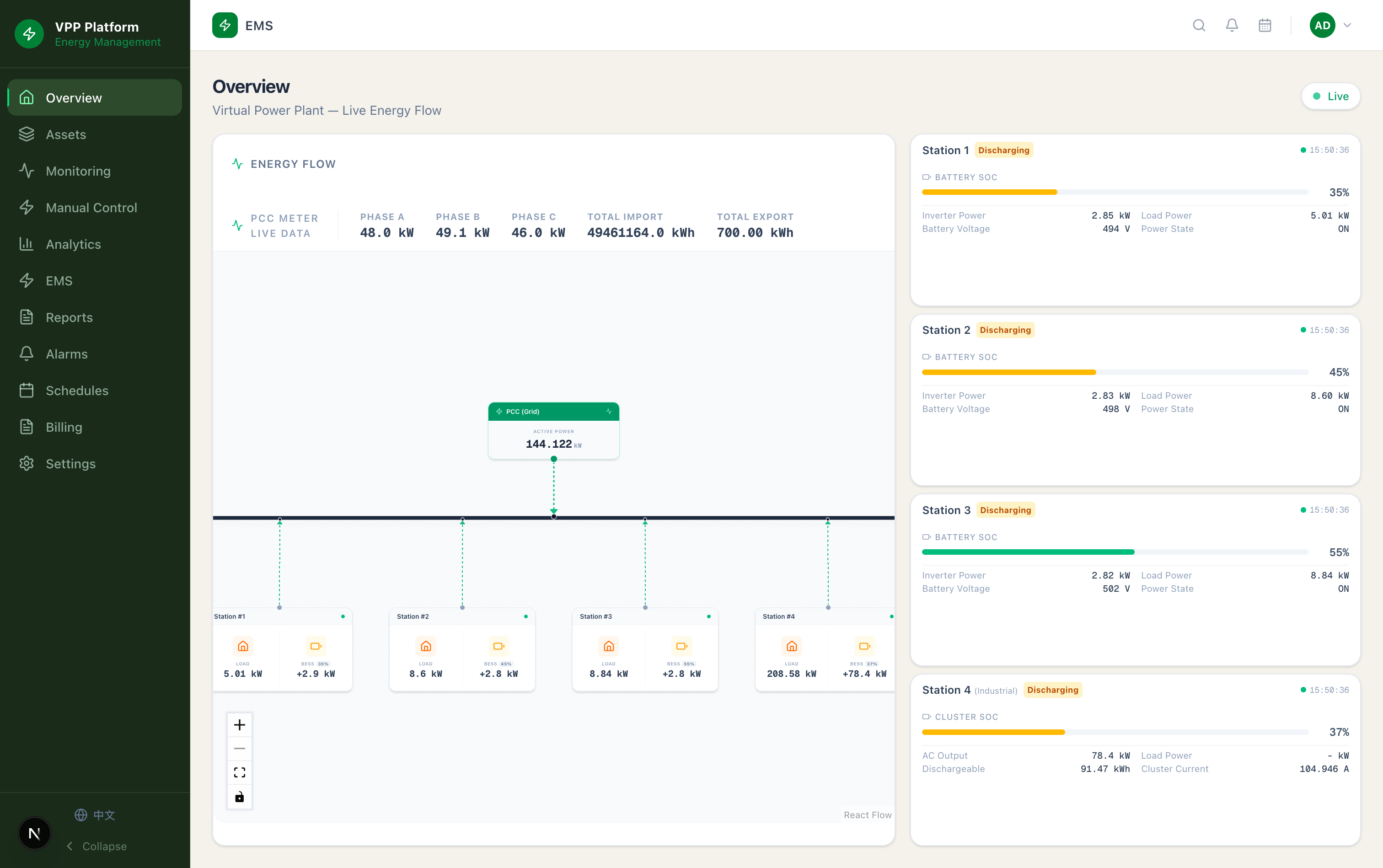
Storage Operations Overview
Displays storage SOC, charge/discharge power, device status, meter power, and building load trends.
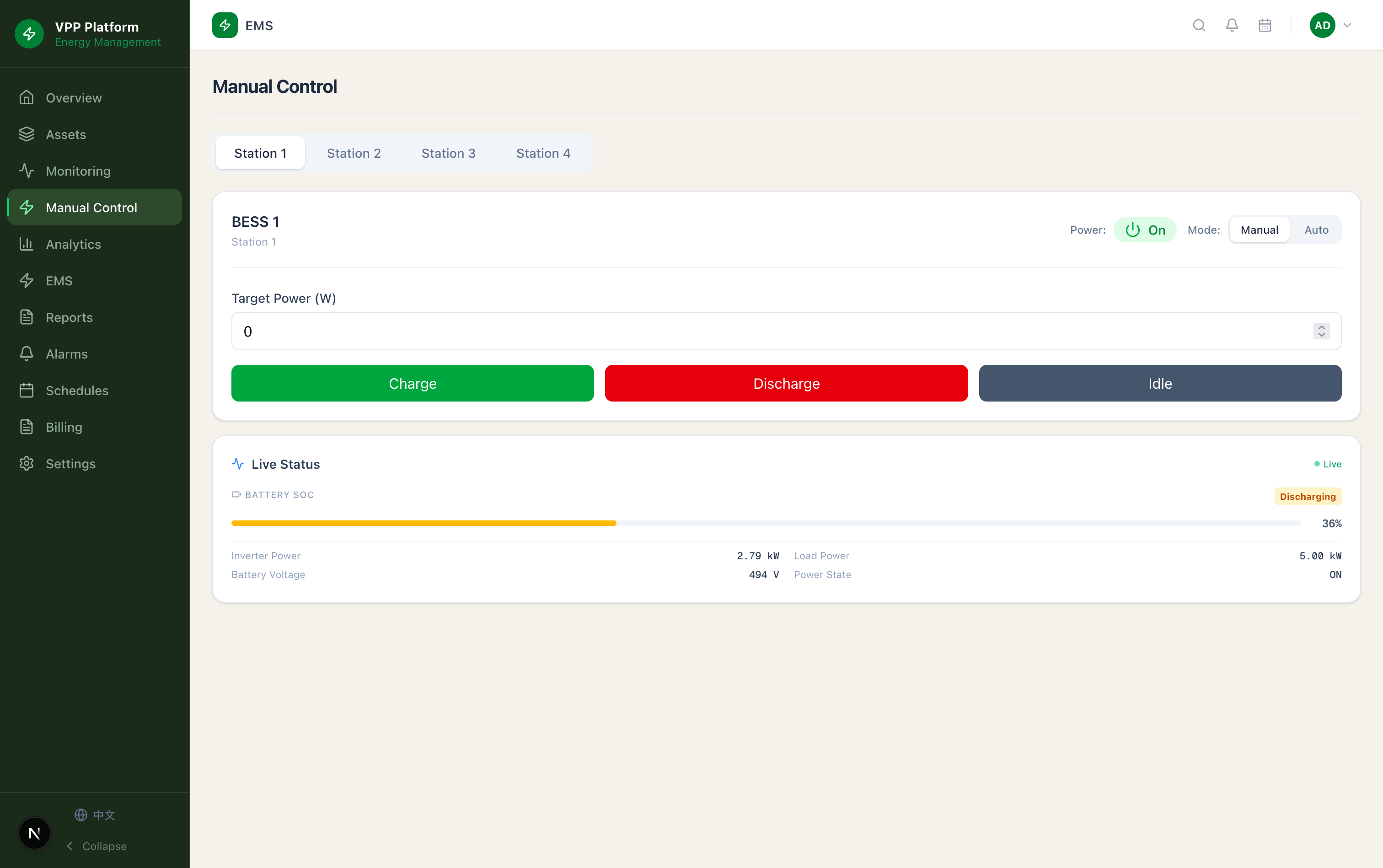
Manual Control Strategy
Manually set charge/discharge power and switch control strategy between local and remote control.
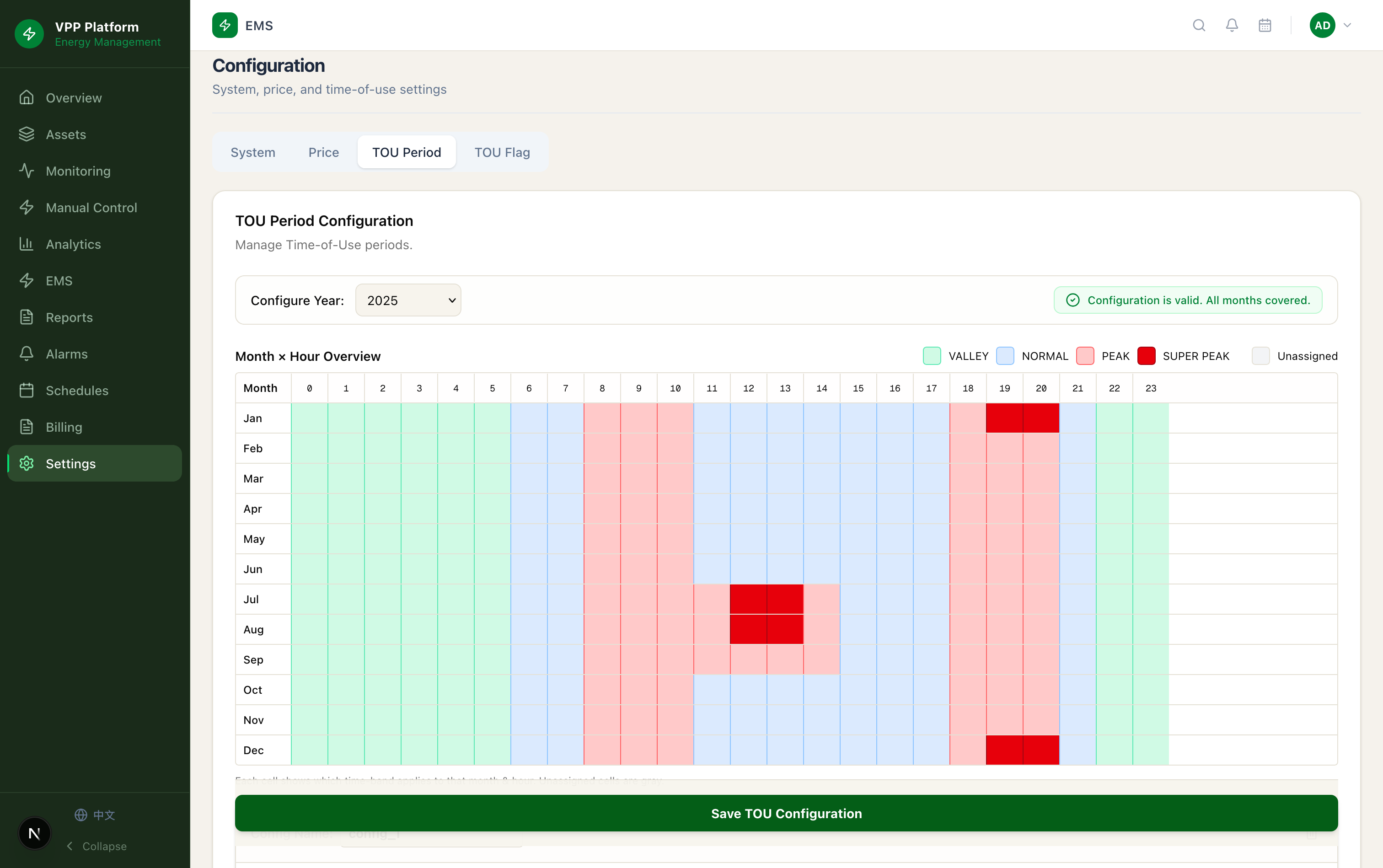
System Configuration
Manage time-of-use pricing settings, charge/discharge segment configuration, and system parameters.
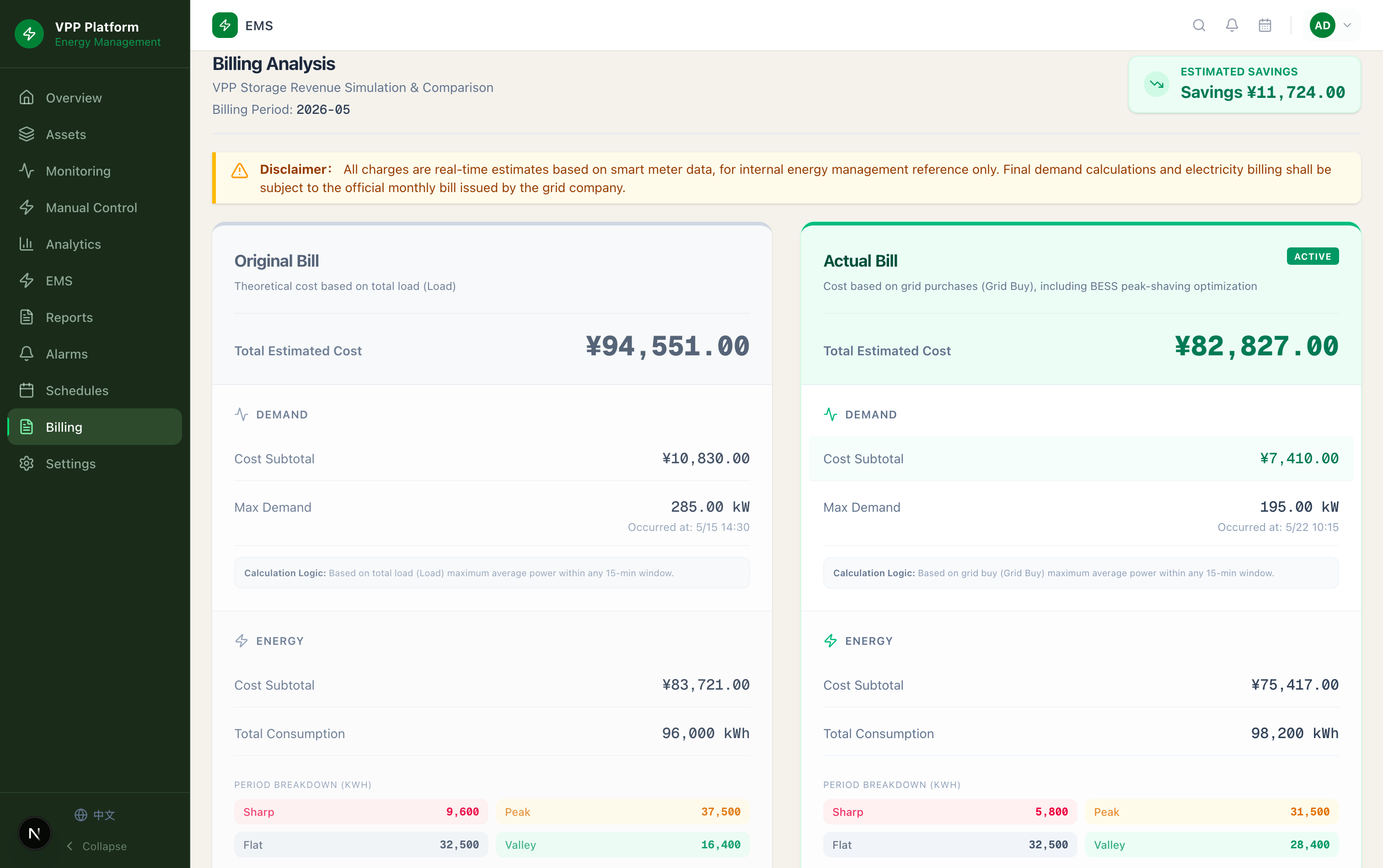
Billing Analysis & Statistics
Displays peak-valley arbitrage returns, demand reduction ratios, monthly operation statistics, and strategy playback.
Project Results
Have a Similar Project?
Chat with our expert team to get customized solutions and practical recommendations.